Note 54 · Sports
What Is a Walkover in Tennis? Walkovers, Retirements, Lets and Foot Faults
· 3 min read
The notes
A walkover in tennis is a win awarded without a ball being struck: one player withdraws before the match begins, so the opponent advances to the next round. Draws and results usually mark it as w/o. It is most often caused by injury or illness, and it is different from a player stopping partway through a match.
Tennis has a handful of these terms that confuse people watching on TV or reading a results page. The common ones are below.
Walkover, retirement and default
| Term | When it happens | How it is usually shown |
|---|---|---|
| Walkover | A player withdraws before the match starts | w/o, no score |
| Retirement | A player stops during the match, usually through injury or illness | The score so far, followed by ret. |
| Default | An official removes a player, for example for serious misconduct or not turning up on time | def. or DEF |
In all three cases the other player moves on. How a walkover counts for rankings, prize money and statistics depends on the tour or event, so official rulebooks for each competition are the place to check the details. At club level the competition organiser decides how late withdrawals are handled.
Why players withdraw before a match
The usual reasons are an injury picked up in an earlier round, illness, or a clash with another commitment. Sometimes a player who is fit enough to start a match will still withdraw because a long tournament run lies ahead and the risk of making an injury worse is not worth it.
What is a let?
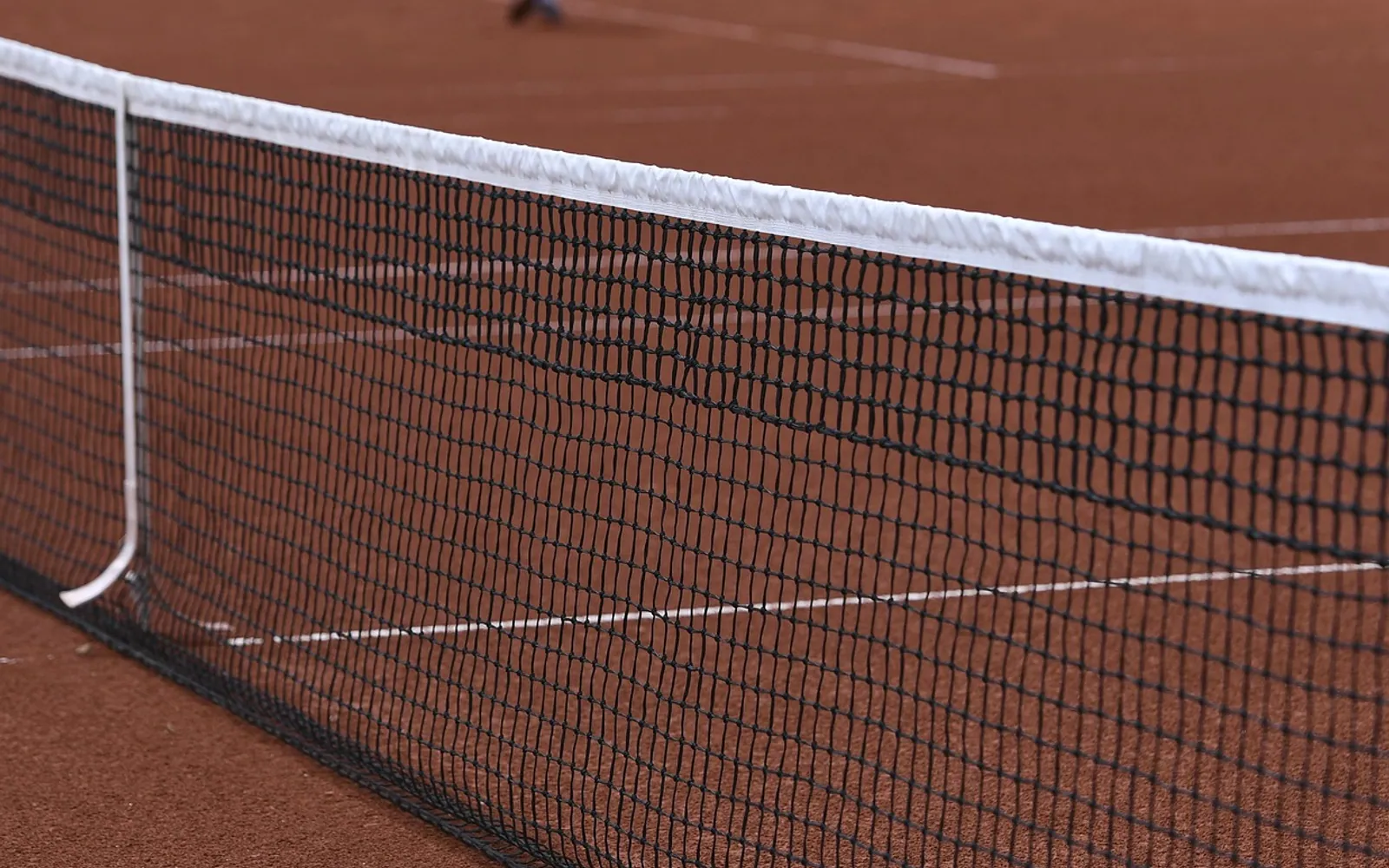
A let means a point is replayed. The most common one happens on the serve: the ball clips the net cord and still lands in the correct service box. The server simply serves again, and it does not count as a fault. If the serve touches the net and lands outside the box, it is a fault as normal.
Lets are also called when something interrupts the point that is nobody's fault, such as a ball rolling onto the court from the next match or the receiver plainly not being ready when the serve arrives. In that case the whole point is replayed, including both serves if it was a first-serve point.
Once a rally is under way, a ball that clips the net and drops over is in play. There is no let in the middle of a rally.
What is a foot fault?
When serving, a player must stand behind the baseline and between the centre mark and the sideline. A foot fault is called if, before the racket hits the ball, a foot touches the baseline or the court inside it, or the server walks or runs into the serve. It counts as an ordinary fault, so a foot fault on a second serve loses the point.
Beginners trip on this more than they expect, especially when they start leaning into the serve. A quick fix is to set the front foot a few centimetres behind the line and let the back foot swing through only after contact.
Other calls that puzzle new players
- Not up: the ball bounced twice before a player hit it.
- Touch: a player or their racket touched the net while the ball was in play, which loses the point.
- Hindrance: a player deliberately or carelessly distracted the opponent; depending on the case the point is replayed or awarded.
- Through: the ball went through a gap in the net rather than over it, so the shot is not good.
How these calls fit the bigger picture
Most of these rules only matter once you know how points become games and sets, which is laid out step by step in our guide to how tennis scoring works. For anyone about to play their first matches, the court lines, serving order and basic etiquette are covered in our beginner's guide to playing tennis, and the equipment side starts with choosing a tennis racket that suits a newer player.
Every guide
What you can expect on each how-to page
The layout is deliberately predictable.
Preparation and safety notes come before the first numbered step.
Steps are numbered in the order you will carry them out.
At least one table compares options, causes or methods.
A section says when the job belongs with a professional.
A closing checklist sums up the whole task in a few lines.
No prices, ratings or figures we have not checked ourselves.
Don’t miss these
 MoviesIPTV in France: The Streaming Revolution You Can’t Ignore2 min read
 ShoppingHow to Arrange Flowers in a Vase (Even a Supermarket Bunch)4 min read
 HomeTransform Your Living Space with Nature-Inspired Wall Mural2 min read
 MoviesWhat Is Film Noir? Shadows, Cynics and Where to Start Watching5 min read