Note 53 · Home
Patio Shade Ideas: Awnings, Sails, Umbrellas and Pergolas Compared
· 4 min read
The notes
The best patio shade is the one that covers the seats at the hour you use them. A west-facing patio that bakes from four o'clock onward needs something very different from a south-facing breakfast spot, and a rented flat with a small balcony has different limits from a house with a long back wall. Start with the sun, then pick the structure.
Watch the sun before you buy
Spend a couple of days noting where the shadow falls at breakfast, lunch and early evening. A phone photo from the same spot each time is enough. Low evening sun comes in at a steep sideways angle, so overhead cover alone often leaves people squinting; that is when a side screen or a tilting option earns its place. High midday sun is easier to block with almost anything overhead.
Also check what you are allowed to fix to. Rented homes, shared walls and some housing associations limit drilling or permanent structures, and larger pergolas can need permission in some areas, so look up local rules before ordering anything big.
The main options side by side
| Shade type | Suits | Drawbacks |
|---|---|---|
| Patio umbrella | Small spaces, renters, moving shade with the sun | Needs a heavy base; must be closed in wind |
| Cantilever umbrella | Shading a table without a pole in the middle | Larger footprint for the base |
| Shade sail | Odd-shaped spaces, a modern look, filtered light | Needs strong fixing points and correct tension |
| Retractable awning | Patios against the house wall, shade on demand | Must be retracted in strong wind; needs a solid wall |
| Pergola | A permanent outdoor room, climbing plants | Open roof gives only partial shade unless covered |
| Trees and climbers | Long-term, cooler air underneath | Takes seasons to grow; leaves and roots |
Umbrellas: flexible and renter-friendly
An umbrella is the quickest fix and the easiest to take with you. A tilting canopy follows the evening sun, and a cantilever model hangs the shade over a table from one side so nobody bumps a pole. The base matters more than people expect: a light base turns an umbrella into a sail on the first gusty afternoon. Close it whenever the wind picks up and at the end of the day.
Shade sails: light and modern
Triangles and squares of tensioned fabric stretched between posts, walls or trees. Overlapping two or three sails at different heights covers awkward shapes and looks deliberate. The fixing points carry real load in wind, so they need to go into sound masonry, proper posts set in footings or mature trunks. A sail pitched with one corner lower than the others sheds rain instead of pooling it.
Awnings: shade at the touch of a crank or button
A retractable awning fixed to the house wall gives deep shade exactly where people sit, then disappears when the sun is welcome. The main decision is how it opens, and the trade-offs between hand-cranked and powered versions are set out in our comparison of manual and motorized retractable awnings. Either way, awnings are not built for storms: retract them in strong wind and heavy rain.
Pergolas: an outdoor room
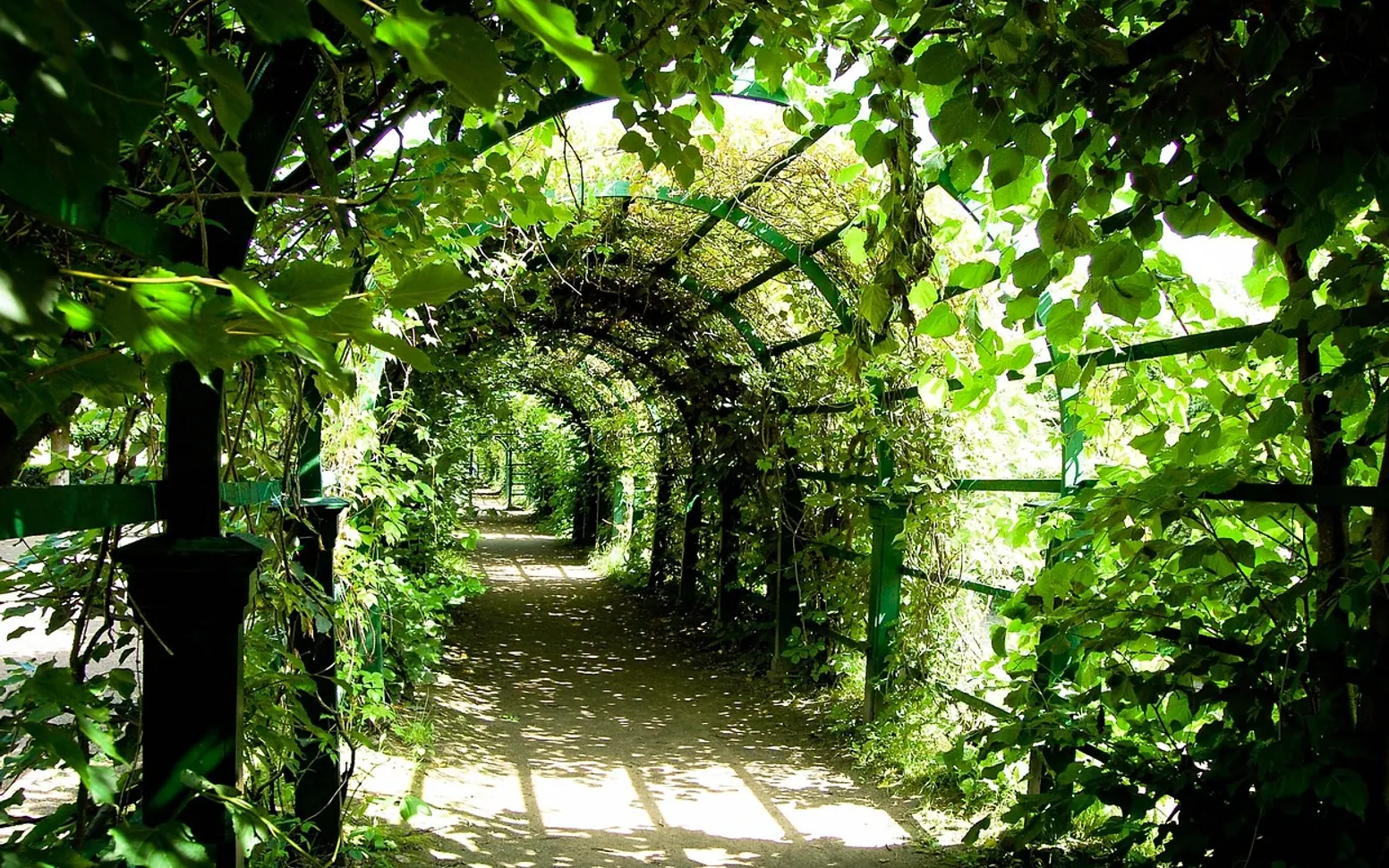
A pergola frames the space and makes a patio feel like part of the house. On its own the slatted roof only casts striped shade, so most people add something: a fabric canopy that slides along wires, louvred panels, reed screening or climbing plants. Plan the post positions around where the furniture will go, not the other way round.
Planting for shade that cools
A tree or a vine-covered frame does something the fabric options cannot: the leaves release moisture, so the air underneath often feels cooler. Deciduous climbers such as grapevines or wisteria give summer shade and let winter sun through. The catch is time, so many gardens pair a quick fix such as an umbrella with planting that will take over later.
Mistakes that leave a patio hot
- Buying for midday when the patio is mostly used in the evening.
- Choosing dark fabric that traps heat directly above people's heads.
- Fitting shade too low, which blocks the breeze as well as the sun.
- Forgetting the floor: pale paving reflects glare, dark paving holds heat into the night.
- Skipping a plan for wind, which is how most umbrellas and awnings get damaged.
Making the space usable once it is shaded
Shade changes how a patio gets used. Suddenly it is the obvious place for a long lunch or a birthday get-together, and the seating question follows quickly; our notes on choosing seating for events cover comfort, spacing and how many chairs a gathering really needs. Keep a back-up plan for a sudden downpour too, since a few indoor activities to keep guests entertained can rescue an afternoon when the weather turns.
Every guide
What you can expect on each how-to page
The layout is deliberately predictable.
Preparation and safety notes come before the first numbered step.
Steps are numbered in the order you will carry them out.
At least one table compares options, causes or methods.
A section says when the job belongs with a professional.
A closing checklist sums up the whole task in a few lines.
No prices, ratings or figures we have not checked ourselves.
Don’t miss these
 MoviesIPTV in France: The Streaming Revolution You Can’t Ignore2 min read
 ShoppingHow to Arrange Flowers in a Vase (Even a Supermarket Bunch)4 min read
 HomeTransform Your Living Space with Nature-Inspired Wall Mural2 min read
 MoviesWhat Is Film Noir? Shadows, Cynics and Where to Start Watching5 min read