Note 44 · Movies
Why Do Movies Have Black Bars? Letterboxing and Film Aspect Ratios
· 5 min read
The notes
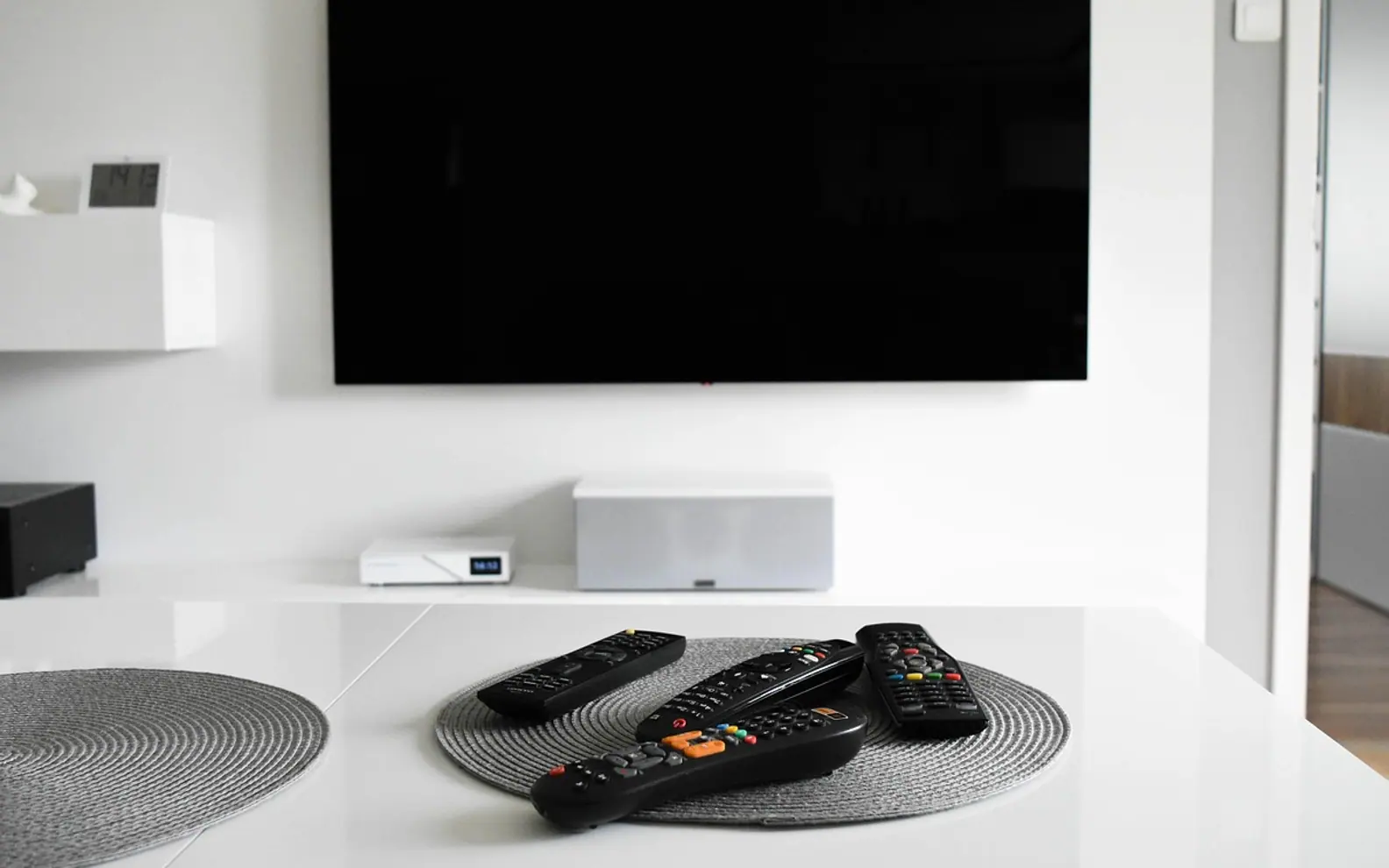
Movies show black bars on a TV because most of them were framed for a cinema screen that is wider than a television. A home set is 16:9, or about 1.78 to 1, while many releases use 1.85 to 1 or the even wider 2.39 to 1. To show the entire frame, the TV shrinks the film until its width fits and leaves the leftover strips at the top and bottom dark. The bars are a sign you are seeing everything the director composed, not a fault in the set.
Film ratios in one table
A picture's shape can be written as a pair, such as 16:9, or as a single figure measured against a height of one, such as 1.78:1. Cinema tends to prefer the second style because it compares at a glance: a larger first figure means a wider, shallower frame and thicker bars on a television.
| Ratio | Common name | Where you meet it |
|---|---|---|
| 1.33:1 (4:3) | Full screen | Old broadcast TV, early silent films |
| 1.37:1 | Academy ratio | Most Hollywood sound films before the mid-1950s |
| 1.78:1 (16:9) | Widescreen TV | HD and 4K televisions, most TV series |
| 1.85:1 | Flat widescreen | Many comedies and dramas |
| 2.00:1 | Two-to-one | Some streaming series and recent features |
| 2.39:1 | Scope or anamorphic | Epics, action and many big releases (often quoted as 2.35 or 2.40) |
| 1.43:1 and 1.90:1 | IMAX | Selected scenes or whole films made for large-format screens |
Bars on top, bars at the sides
These three terms describe where the bars appear.
- Letterboxing: bars at the top and bottom, because the film is wider than the screen. A 2.39:1 movie on a 16:9 set is the classic case.
- Pillarboxing: bars on the left and right, because the picture is narrower than the screen. Old 4:3 programmes and classic black-and-white films look like this.
- Windowboxing: bars on all four sides, usually when a letterboxed image is placed inside a pillarboxed one by mistake somewhere along the chain.
The last one is a genuine fault. The first two are normal and usually the right result.
Why films are wider than TVs
In the early 1950s cinemas wanted something television could not offer, and wider screens became part of the answer. Formats such as CinemaScope stretched the frame, and wide ratios have stayed linked with spectacle ever since. Television settled on 4:3 for decades and then moved to 16:9 as a compromise that sits between the old TV shape and the common cinema ratios. No single screen shape suits everything, so something has to give.
What happened before widescreen TVs?
Older home video often used pan and scan: the film was cropped to 4:3, and an operator decided which part of each shot to keep. Whole characters could vanish from the edge of a conversation. Some releases also used open matte, revealing extra picture at the top and bottom that cinemas had masked off. Both approaches change the composition, which is why many viewers now prefer the original ratio with bars.
Choosing the right picture-size setting
Every TV has a menu that controls how incoming video is fitted to the panel. The names differ between brands, but the options usually fall into these groups.
- Fit, Just Scan or Screen Fit: shows the full signal pixel for pixel with no cropping. This is the setting to use for films and most viewing.
- 16:9 or Auto: fills the screen with a 16:9 signal; on many sets it also adds a little overscan, trimming the edges.
- Zoom or Cinema Zoom: enlarges the picture to remove letterbox bars, cutting off the sides of the frame.
- Wide or Stretch: pulls a narrower image sideways to fill the screen, which makes faces look broad and circles look like ovals.
If something looks slightly cropped, such as captions touching the edge, look for an overscan option and turn it off. Check the setting on each input separately, because many sets remember picture size per HDMI port and per app. That matters more now that films reach the screen through apps and set-top boxes as often as through a cable feed, a shift described in why IPTV wins on convenience.
When the bars change during a film
Some releases switch ratio mid-film. Scenes captured with IMAX cameras may open up to fill more of the screen, then return to letterbox for the rest. This is called a variable or shifting aspect ratio, and it is deliberate. The TV is doing nothing wrong.
Screen size and the bars
A wide film on a 16:9 set uses less of the panel's height, so it can feel smaller than expected. That is one reason to think about viewing distance and placement when you mount a TV on the wall: sitting a little closer makes letterboxed films feel more cinematic without cropping anything. Enthusiasts sometimes go further with ultra-wide projector screens, but for most living rooms a well-placed 16:9 set is the practical choice.
Common mistakes to avoid
- Using Stretch to "fix" an old programme and leaving it on for everything afterwards.
- Assuming the streaming app or cable box has failed when a wide film appears letterboxed.
- Comparing two TVs in a shop while one is set to zoom and the other to fit.
- Forgetting that picture modes matter too: a bright shop-floor preset with heavy motion processing changes how a film feels even when its shape is right. A Movie or Cinema preset is a calmer starting point, and tidy, secure connections behind the set, as in the note on hiding TV cables, rule out dropouts that look like picture faults.
Questions about the bars
Why do old films have bars on the sides?
They were shot close to square, usually in the Academy ratio. Classic crime pictures are a good example; the overview of what film noir is includes several titles you will see pillarboxed on a modern set.
Can I get rid of the bars without losing anything?
Only with a screen that matches the film's shape. On a 16:9 TV, removing bars from a 2.39:1 film always means cropping or distorting part of the image.
Is 21:9 the same as 2.39:1?
Close but not always identical. "21:9" is a marketing label for ultra-wide screens, and the true shape depends on the resolution, typically somewhere between about 2.33 and 2.39 to one. A scope film may fill such a screen or leave hairline bars, while 1.85:1 films and TV series get bars at the sides instead.
Every guide
What you can expect on each how-to page
The layout is deliberately predictable.
Preparation and safety notes come before the first numbered step.
Steps are numbered in the order you will carry them out.
At least one table compares options, causes or methods.
A section says when the job belongs with a professional.
A closing checklist sums up the whole task in a few lines.
No prices, ratings or figures we have not checked ourselves.
Don’t miss these
 MoviesIPTV in France: The Streaming Revolution You Can’t Ignore2 min read
 HomeTransform Your Living Space with Nature-Inspired Wall Mural2 min read
 MoviesWhat Is Film Noir? Shadows, Cynics and Where to Start Watching5 min read
 HomeWhy Flea and Tick Control Shouldn’t Be Ignored — Even Without Pets2 min read